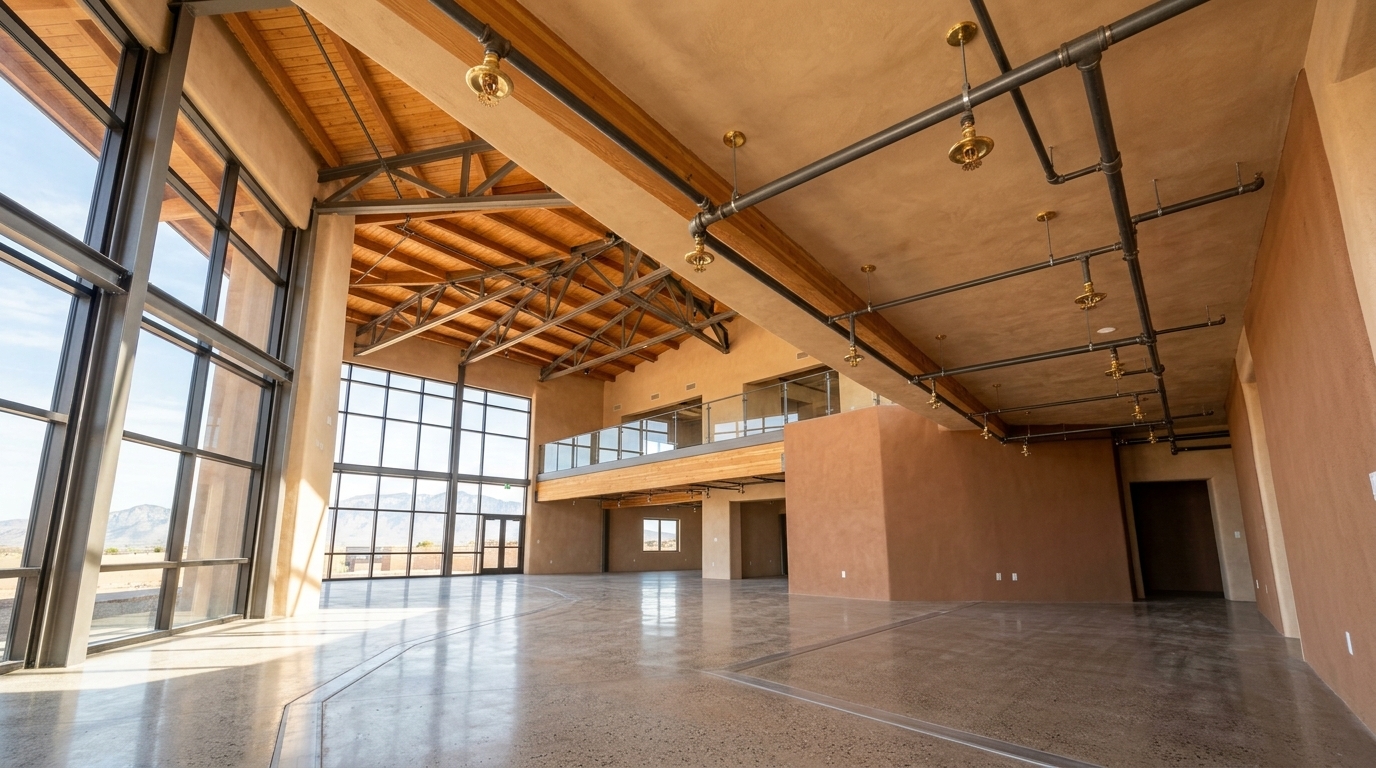
Albuquerque Fire Sprinkler Contractors: Install, Inspect, Retrofit
Sprinkler systems and code-driven inspections for Albuquerque commercial, multifamily, healthcare and high-desert new construction.
Installation · Inspection & testing · Retrofit · Backflow & fire pump service — Pueblo-revival and adobe-style commercial buildings, growing multifamily, high-desert water supply and elevation
Free Fire Sprinkler Quote
Albuquerque Fire Sprinkler Services
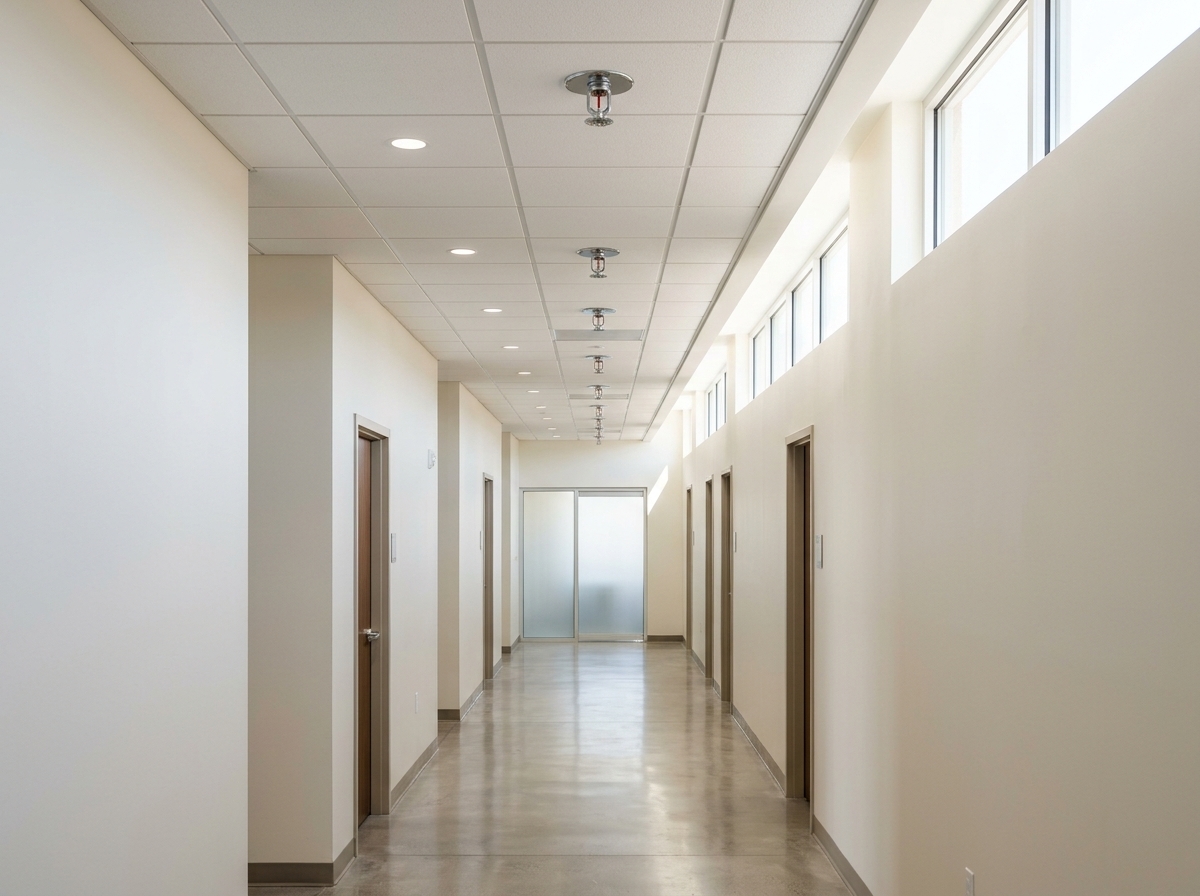
Sprinkler System Design & Installation (NFPA 13, 13R, 13D)
Engineered wet and dry sprinkler systems for new Albuquerque commercial, multifamily and residential construction, matched to the right NFPA standard.
Fire Sprinkler Inspection, Testing & Maintenance (NFPA 25)
Recurring inspection, testing and maintenance for Albuquerque buildings, with deficiency reports and documentation for the fire marshal and your insurer.
Retrofit & Tenant Improvement Sprinklers
Adding or modifying sprinklers in older commercial and mixed-use buildings, and relocating heads when tenants change layouts.
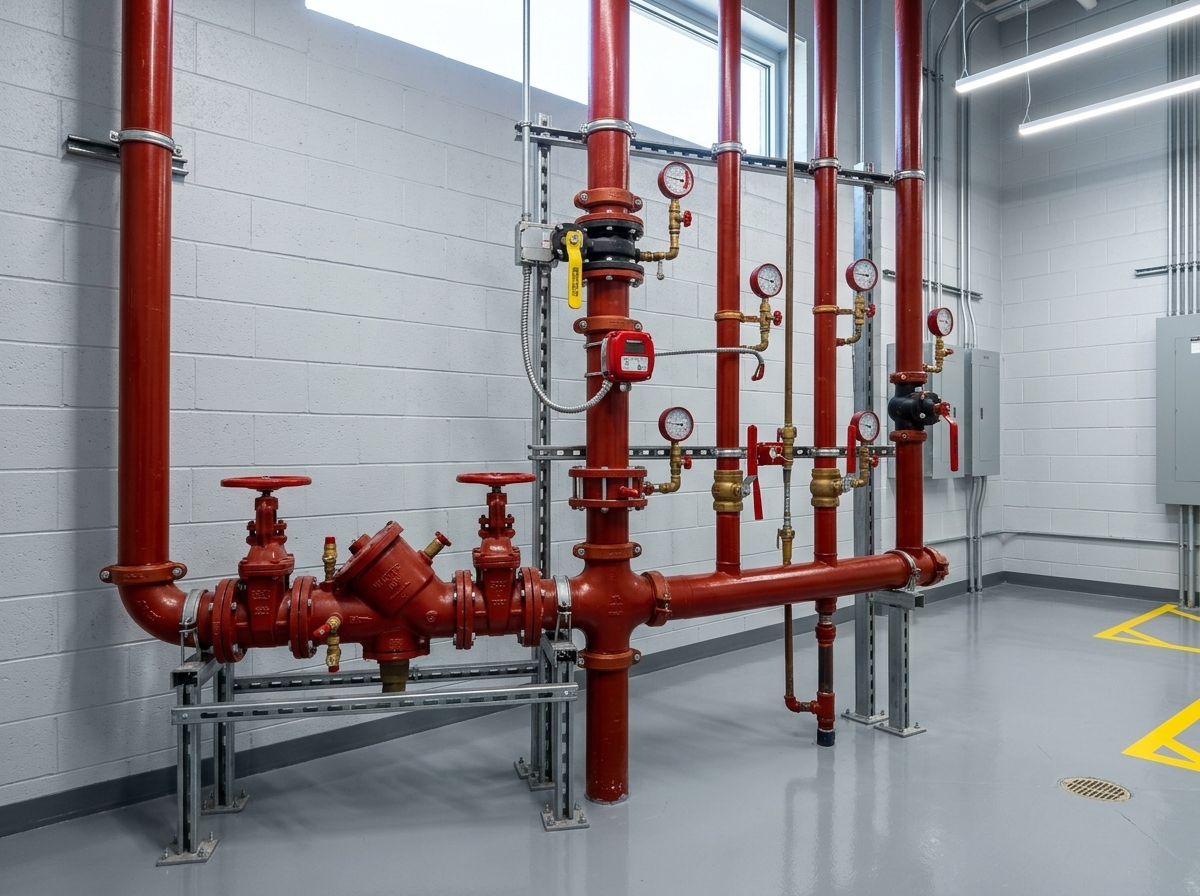
Backflow, Standpipe & Fire Pump Services
Backflow preventer testing, standpipe and fire pump service, and underground fire line work for Albuquerque properties.
Fire Sprinkler Systems We Install and Service
Areas We Serve
The Complete Guide to Fire Sprinkler Systems in Albuquerque
Albuquerque is a city of layers. A Route 66 corridor of 1930s service stations and neon-lit storefronts runs through Nob Hill and Downtown, Pueblo Deco and Pueblo Revival buildings sit a few blocks from glass office towers, and the Westside keeps adding warehouses, apartments and medical campuses toward the volcanic escarpment. Every one of those building types answers to the same sprinkler question: what does the adopted code require here, who signs off on it, and what will it take to keep the system working for decades? This guide walks through those questions the way an Albuquerque owner, developer or property manager actually meets them.
Most sprinkler work in the metro falls into four buckets. New construction needs a system designed to NFPA 13 for commercial and industrial occupancies, NFPA 13R for many low-rise apartment buildings, or occasionally NFPA 13D in houses where an owner or a specific project chooses to install one. Existing buildings need retrofits when an addition, change of occupancy or major alteration crosses a code threshold. Tenant improvements need heads relocated, added or re-hydraulically checked every time a suite is re-walled. And every system, old or new, needs recurring inspection, testing and maintenance under NFPA 25, plus annual backflow testing on the water side.
Local conditions shape all four. Albuquerque sits at roughly mile-high elevation in a cold semi-arid climate, so freezing nights are common in winter even though annual precipitation is low. The water utility blends treated surface water with groundwater, and the city's streets sit on many separate pressure zones from the river valley up to the Heights, so a hydrant flow test on one block can tell a very different story from the next. Add historic adobe-style walls, parapet roofs and flat-roof mechanical spaces, and the details of head placement, pipe routing and freeze protection are not generic.
That is why many owners prefer a single contractor to handle design, installation and the years of service that follow. When the people who laid out the hydraulic calculation are the same people who later find a corroded dry-pipe fitting or a blocked drain at an annual inspection, problems get fixed faster and the paper trail for the fire marshal and the insurer stays consistent. Use this guide to understand the landscape, then confirm current requirements for your address with the authority having jurisdiction before you commit to a scope.
Albuquerque's Building Stock and What It Means for Sprinklers
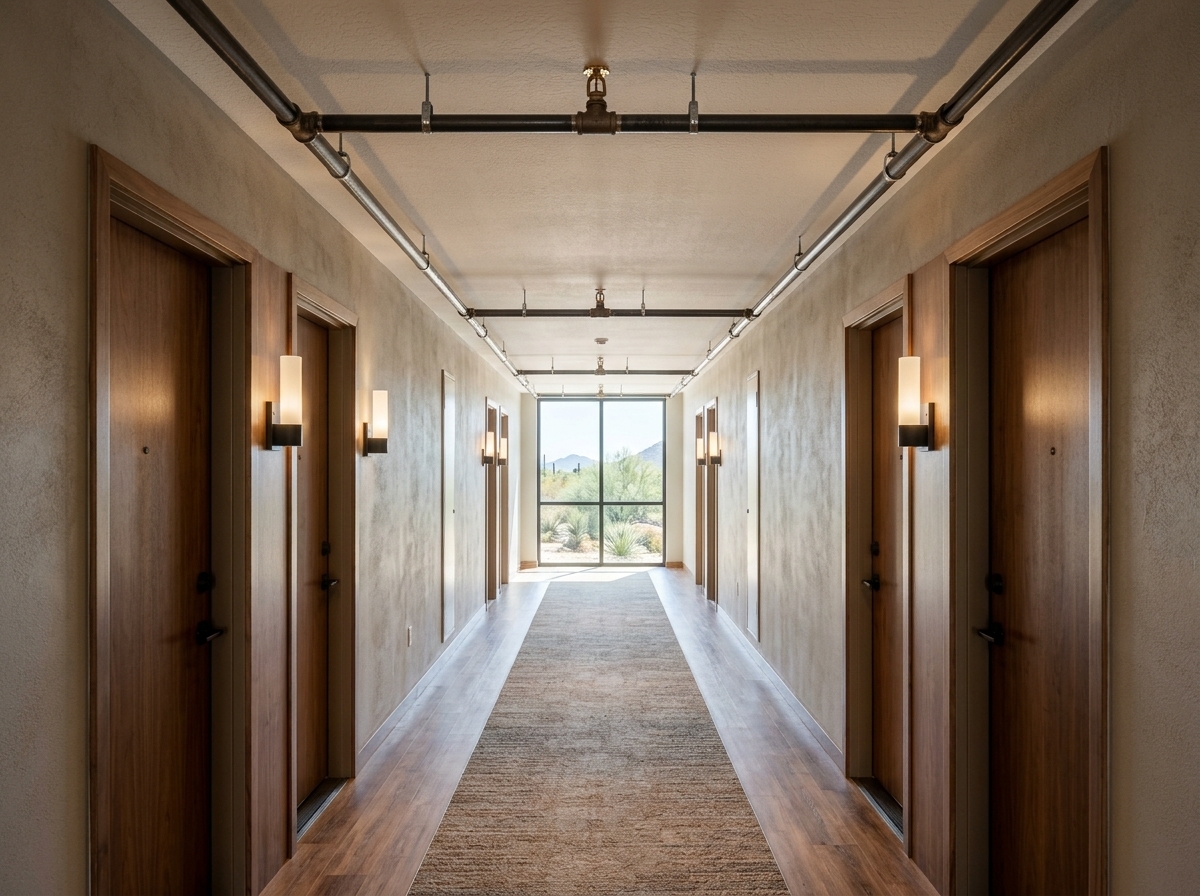
The oldest commercial fabric is in Downtown and along Central Avenue. Buildings from the early twentieth century include terra-cotta-clad offices, brick and masonry banks, and landmark theaters such as the 1927 KiMo, a Pueblo Deco design that blends Art Deco massing with Native American motifs. These structures often have thick masonry walls, tall ceilings, decorative ceilings and concealed voids. Running new pipe through them without damaging historic finishes usually means careful coordination: exposed pipe painted to match, heads centered on ceiling features, and routing through chases that already exist.
Midcentury Albuquerque adds another type. Nob Hill grew along Route 66 in the 1930s to 1950s, and its Streamline Moderne service stations, motor courts and early auto-oriented shopping centers are now restaurants, shops and small offices. Uptown, around Louisiana Boulevard, is the postwar suburban answer: enclosed malls, office towers and hotels. Large retail and hotel buildings of that period may have been built before current sprinkler thresholds, or protected under older editions of NFPA 13, and the original density and spacing assumptions may no longer match how the space is used today.
Pueblo Revival and adobe-style construction, both historic and modern imitation, brings its own details. Flat roofs with parapets, projecting vigas, deep window reveals and stucco over masonry or frame change how piping can be hidden and where heads can reach. Newer buildings in this style, common on the Westside and in Rio Rancho, often have interior courtyards, covered portals and exterior ceilings that raise questions about whether those spaces are protected. In the North Valley, older adobe, frame and agricultural buildings sit beside newer commercial infill, and some parcels fall under Bernalillo County or the Village of Los Ranchos rather than the city, so the right AHJ for an address is worth confirming at the start.
Permitting and Plan Review for Sprinkler Systems in Albuquerque
Permitting authority: Albuquerque Fire Rescue Fire Marshal's Office, City of Albuquerque Building Safety, and New Mexico State Fire Marshal Division
Inside Albuquerque city limits, sprinkler plans are typically reviewed by the Albuquerque Fire Rescue Fire Marshal's Office working alongside the city's building safety and permitting staff. The fire marshal publishes plan-review checklists, including one specific to automatic sprinkler systems. They typically ask for the NFPA 13 edition used, occupancy and construction type, water supply information from an official flow test, hydraulic calculations that tie back to reference points on the drawings, and component data such as sprinkler K-factors, pipe schedules, valves and backflow assemblies. The city's online permitting portal is generally used to submit plans, and a sprinkler package is often filed as a linked fire-protection item under the main building permit. Confirm current portal and file-naming rules with the city before submitting.
The state sets the baseline code. New Mexico's fire code rule, 10.25.5 NMAC, adopts a version of the International Fire Code, and the commercial and residential building codes are in 14.7.2 and 14.7.3 NMAC. In practice, commercial work is designed to NFPA 13 as referenced by those adopted codes, apartments of limited height may use NFPA 13R where the building code allows it, and the editions of NFPA standards are the ones named by the adopted code cycle, which may differ from the newest NFPA publication. For one- and two-family dwellings and townhouses, New Mexico's residential code has been reported to remove the model code's mandatory sprinkler requirement, so houses are typically sprinklered only by choice or by a specific local requirement. Check the current NMAC text and with the city, because amendments and code cycles change.
Who may do the work is also regulated. State rules require fire protection contractors and personnel to hold the appropriate Construction Industries Division licensing and a State Fire Marshal Certificate of Fitness (10.25.2 NMAC). A water-based fire protection sprinkler classification is commonly referenced as MS-12, with MM-98 as a broader mechanical option, but confirm current classifications with CID. Inspections of installed work typically include an underground and flush verification, a rough-in or overhead inspection before ceilings close, a hydrostatic test, and a final flow or acceptance test witnessed by the AHJ. Timelines for plan review vary with project size and workload, so ask the fire marshal's office for current expectations rather than relying on a fixed number.
What Drives Sprinkler Project Cost in Albuquerque
Pricing depends on the building and the site, so we do not publish fixed numbers. These are the factors that most often move a sprinkler budget in the Albuquerque area.
- Water supply and flow test results
- Hydraulic design starts with an official flow test. If static and residual pressure at the nearest hydrant are modest or the main is a small dead end, the design may need larger pipe, a fire pump, or a tank. Streets in the Heights, the valley and the Westside sit on different pressure zones, so the same building type can have very different requirements by location.
- Underground fire line and backflow assembly
- A new service often needs a dedicated fire line from the main, a backflow assembly approved by the water utility, a vault or enclosure, and a detector check. Trenching depth, utility conflicts, caliche or rocky soils, and street-cut requirements all affect cost.
- Building type and occupancy hazard
- Offices, hotels, apartments, warehouses, healthcare and restaurants fall into different hazard classifications and design densities. High-piled storage in Westside distribution buildings can drive larger demand, in-rack heads or ESFR designs, and a pump.
- Historic and decorative interiors
- Downtown and Nob Hill buildings with historic finishes, vigas, tall ceilings and concealed voids take more field coordination. Concealed or recessed heads, paint matching and careful routing add labor.
- Freeze protection in unconditioned areas
- Freezing winter nights mean attics, loading docks, parking garages, portals and canopies often need dry-pipe, pre-action, antifreeze where allowed, or heat-traced arrangements. Those systems cost more to install and maintain than a typical wet system.
- Plan review scope and coordination
- Phased reviews, stand-alone permits, changes during construction and several jurisdictions on the metro edge, such as the city, Rio Rancho and the county, all add coordination time. Early engagement with the AHJ typically reduces rework.
Seasons & Climate in Albuquerque
Albuquerque has a high-desert climate: sunny, dry for most of the year, with large temperature swings between day and night. Winter nights routinely fall below freezing, and the coldest stretches can hit the teens. That matters for any piping outside the heated envelope. Attic sprinklers, unheated vestibules, loading docks and canopy heads are where freeze breaks show up. A winter cold snap is also when owners discover an unheated riser room or a drain valve that was left open.
Most precipitation arrives in the summer monsoon, typically July through September, with afternoon storms that can slow site work and trenching. That makes late spring and early fall the most predictable windows for underground fire line work and exterior fire pump installation. Interior sprinkler rough-in can run year-round, but scheduling inspections that need heat for hydrostatic tests, or anything tied to concrete work, is easier outside the coldest weeks. Dry, dusty conditions also mean dust accumulation on heads and strainers can show up at inspections, so cleanliness belongs in the maintenance plan.
Fire Sprinkler Project Timeline in Albuquerque
1. Pre-design and AHJ check (1-2 weeks)
Confirm which authority has jurisdiction for the address, pull the occupancy and construction type from the architect, and request a water flow test. Typically the fastest way to avoid late redesign is to settle these early.
2. Design and hydraulic calculation (2-4 weeks)
Layout drawings, hydraulic calculations and cut sheets are produced to the NFPA 13 edition the code references. Larger or fire-pump projects typically take longer.
3. Plan review and permit (2-6 weeks, often variable)
Plans go to the Fire Marshal's Office and permitting through the city's system or to the applicable AHJ, such as Rio Rancho or Bernalillo County. Comments are answered and resubmitted. Ask the AHJ for current turnaround.
4. Underground and rough-in (2-8 weeks, varies by scope)
Fire line, riser and overhead piping are installed in step with other trades. The AHJ typically inspects the underground flush and overhead work before ceilings are closed.
5. Testing and acceptance (1-2 weeks)
Hydrostatic test, flow alarm tests, backflow assembly test and final witnessed acceptance. Record drawings and test certificates are delivered to the owner.
6. Ongoing ITM under NFPA 25 (Recurring)
Weekly, monthly, quarterly, annual and multi-year tasks follow the NFPA 25 schedule for the installed system, and reports go to the owner and, when requested, the AHJ.
Albuquerque Fire Sprinkler FAQ
Who reviews fire sprinkler plans in Albuquerque?
Inside the city, plans are typically reviewed by the Albuquerque Fire Rescue Fire Marshal's Office together with the city's building permit process. Rio Rancho has its own Fire Marshal's Office, and properties in unincorporated Bernalillo County or the Village of Los Ranchos may fall under different reviewers. Confirm the AHJ for your specific address before design starts, since it controls which checklist, permit and inspection steps apply.
Does New Mexico require sprinklers in new houses?
The model International Residential Code requires them in new one- and two-family homes, but New Mexico's residential code has been amended to remove that mandate for typical houses and townhouses. A system may still be installed voluntarily, or required by a specific rule, plan condition or occupancy. Check the current 14.7.3 NMAC text and ask the city whether anything local applies to your project.
What licenses should a sprinkler contractor hold here?
State rules typically require a Construction Industries Division license in an appropriate classification, commonly MS-12 for fire protection sprinklers, and a State Fire Marshal Certificate of Fitness for the company and personnel. Ask to see current documents before hiring anyone, and verify them with the state agencies. We do not assert licensing in this guide, so confirm credentials directly.
How often must a sprinkler system be inspected?
NFPA 25 sets recurring tasks that range from weekly or monthly checks of gauges and valves to quarterly, annual and multi-year tests, depending on the system. Fire code adoption makes NFPA 25 enforceable. Owners are responsible for ensuring the work is done by qualified personnel and for keeping reports available for the fire marshal or insurer.
Do I need a backflow assembly on a fire line?
Most commercial fire services connected to the public water system require an approved backflow assembly, and the water utility generally requires annual testing by a certified tester with results reported to the utility. The right assembly type depends on the hazard, such as chemical additives or a secondary supply. Confirm current requirements with the Albuquerque Bernalillo County Water Utility Authority cross-connection office.
Is freeze damage a real concern in Albuquerque?
Yes. Winter nights frequently drop below freezing, and the colder stretches can be much lower. Sprinkler piping in attics, canopies, garages, loading docks and unheated vestibules is most at risk. Dry-pipe or pre-action systems, properly insulated and heated enclosures, and winter walk-throughs of riser rooms help reduce the risk. NFPA 13 and 25 each address cold-weather concerns.
Can historic buildings be sprinklered without ruining the look?
Often yes. Concealed or recessed heads, paint-matched exposed pipe, and routing through existing chases can limit visual impact. Work in listed or historic buildings may need additional coordination with preservation reviewers. Early design review and mockups of a typical head and pipe run help owners and the AHJ agree on the approach before installation.
How is a new hydrant flow test arranged?
A flow test measures static and residual pressure at a hydrant near the project and feeds the hydraulic design. In the utility's service area, the water authority and fire department typically coordinate the process, and public hydrants are maintained by the utility while private hydrants are the owner's responsibility. Ask the authority for its current procedure, since scheduling and fees can change.
Sources & Further Reading
Local requirements change. Always confirm current rules with the permitting agency before starting work.
- Albuquerque Fire Rescue - Fire Marshal's Office (City of Albuquerque)
- Albuquerque Fire Rescue (City of Albuquerque)
- Albuquerque Bernalillo County Water Utility Authority
- 10.25.5 NMAC - New Mexico fire code rule (State Records Center and Archives)
- 10.25.2 NMAC - Certificates of Fitness (State Records Center and Archives)
- 14.7.2 NMAC - New Mexico Commercial Building Code (State Records Center and Archives)
- 14.7.3 NMAC - New Mexico Residential Building Code (State Records Center and Archives)
- New Mexico Construction Industries Division (Regulation and Licensing Department)
- NFPA 13 - Standard for the Installation of Sprinkler Systems
- NFPA 25 - Standard for the Inspection, Testing, and Maintenance of Water-Based Fire Protection Systems
- National Weather Service Albuquerque
- City of Rio Rancho